Real Estate Project Branding
Project branding determines how a buyer recognizes and remembers a development, and understands why this one, before entering the sales office. It begins with research, not a logo: who the audience is, what differentiates the project, and which name will work on signage, in search, on WhatsApp, and in English transliteration. This page expands on our branding, content, and public relations service.
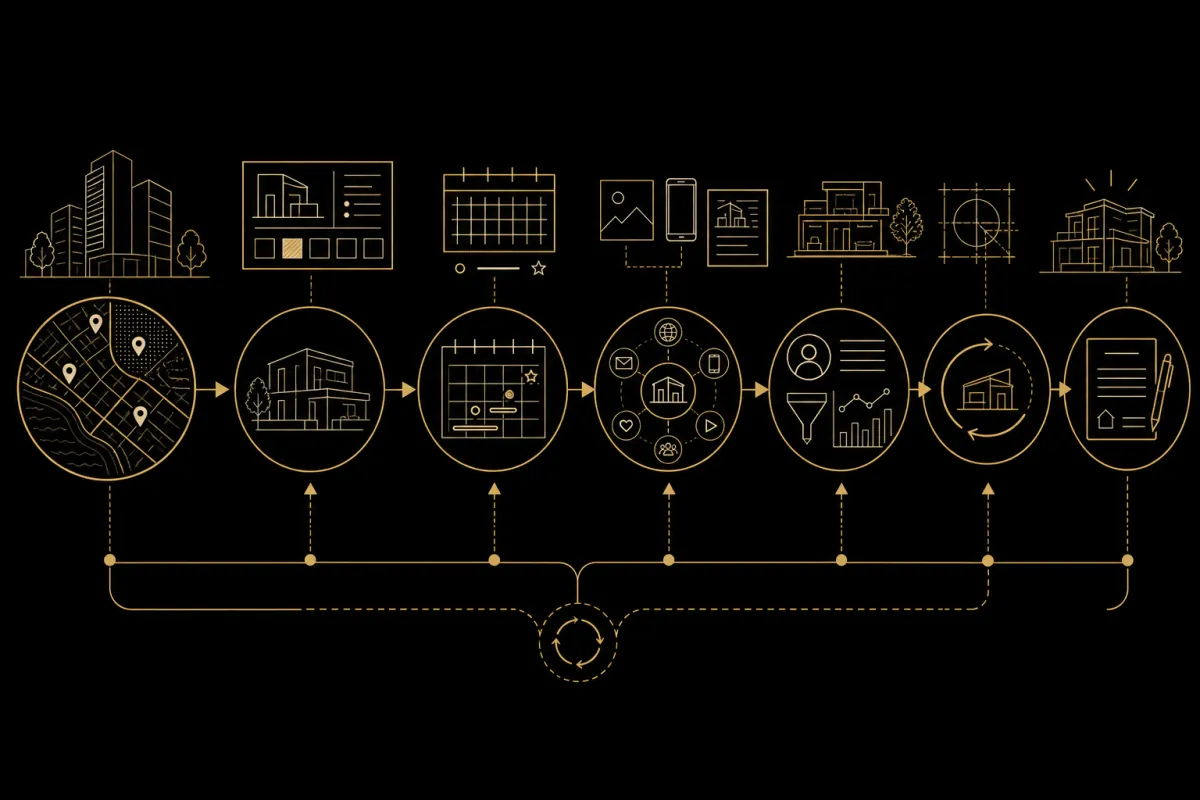
The playbook at a glance
Research, launch, measure, improve
Use the guide as a sequence rather than a menu of tactics. Each stage creates the inputs needed by the next one.
- Market map
- Launch plan
- Lead system
- Optimization loop
What Project Branding Actually Is
Project branding is not the logo or the color palette. It is a system of decisions about how the project appears at every point of contact so each one tells the same story: what the project promises, who it is for, and why the buyer should believe it. Trust grows when the advertisement, website, brochure, and sales representative say the same thing. When they contradict one another, the buyer feels uncertainty at the exact moment a decision is approaching.
The first important distinction is between the developer brand and the project brand. A developer brand is built over years and across projects, and its role is trust and familiarity. A project brand is built to sell specific units within a defined window. They should support one another, but they have different objectives and sometimes different audiences.
Research Before Branding
Branding that begins with design instead of research may produce something attractive that does not necessarily sell. Before the name and visual language, you need to know the primary and secondary audience for each unit type, what differentiates the project from competitors within the same radius, and what truly determines the buyer's choice. A name and message chosen according to the project owner's taste rather than the audience are difficult and expensive to correct once the signs are installed.
Choosing a Name: What a Strong Name Must Survive
The project name is the hardest branding decision to change later, so it deserves serious work. A good name does more than "sound attractive." It passes a set of practical tests:
- It can be read correctly on a sign and spoken in the street without explanation
- It can be found in Google without confusion with an existing name
- It works in a WhatsApp message and a short web address
- It transliterates into English without an awkward meaning when the project also targets overseas buyers
- It suits the audience, since luxury, family, and urban-renewal projects do not use the same register
- It does not promise anything the project cannot deliver
Several naming approaches recur: a location-based name, a name built around a feeling or lifestyle, or an invented name created from scratch. Each carries benefits and risks. The right choice follows the audience and competitive context, not personal preference.
Verbal and Visual Language
The name leads into two languages that should feel like one. Verbal language is the tone: how the project speaks, which words recur, and what its central promise is. Visual language includes the logo, colors, typography, and renderings. In real estate, renderings are part of the brand rather than an appendix because they are often the first thing a buyer sees.
Audience fit changes everything. A luxury project calls for restraint, space, and precise detail. A family project needs warmth, community, and tangible daily life. An urban-renewal project needs trust, confidence in the schedule, and a sense of improvement. The same visual language cannot serve all three.
Branding by Project Type
Each segment has its own visual and verbal code, and mixing them weakens the message. Three examples show how specific the differentiation needs to be:
Luxury
Less text, more open space, and materials and finishing expressed in every detail. The buyer is purchasing exclusivity and discretion, and the brand should convey them rather than announce them.
Family
Warmth, community, and an image of daily life: a playground, a balcony, and neighbors. The message rests on belonging and security, not luxury.
Urban renewal
The brand needs to reduce anxiety through schedule clarity, a visible developer identity, and a concrete picture of the result compared with what exists today. Trust comes before aesthetics.
Marketing Brochure Versus Binding Sale Plan
This is a common point of confusion worth resolving. The marketing brochure is a sales tool. It presents the project, surroundings, and lifestyle, and its role is to create interest. The statutory sale plan under Israeli sale law is a binding legal document containing the precise technical specification the developer owes the buyer. They are not the same, and the marketing brochure must not contradict the binding specification or create an expectation that cannot be met.
We are not legal advisers. Questions about sale law and the binding specification should be reviewed with a lawyer. Our role is to keep the marketing material accurate and compelling without promising more than exists.
Consistency Across the Advertisement, Website, and Salesperson
The simplest test of a strong brand is whether a buyer who saw an advertisement, visited the website, and then spoke with a representative heard the same story at all three points. If the advertisement promises luxury, the website looks generic, and the representative speaks only about price, the brand breaks. Consistency is not merely aesthetic. It lets the buyer build trust through the funnel instead of starting again at every contact.
The same consistency must reach the physical environment. The branded construction fence, site signage, and sales office are often where a buyer first meets the development in the real world after discovering it on a screen. When they continue the same language, the buyer arrives somewhere that already feels familiar. When they look unrelated, uncertainty appears at the moment closest to a decision.
Common Real Estate Branding Mistakes
Design before research
An attractive logo chosen before the audience is defined. It may look good while selling less effectively.
An untested name
A name that conflicts with an existing search result or sounds awkward when transliterated for overseas buyers.
One message for everyone
The same story for the investor, family, and move-up buyer. In the end, nobody feels directly addressed.
A brochure that contradicts the specification
Marketing material that promises more than the binding sale plan. It creates legal risk and breaks trust.
Request a Branding Framework for Your Project
Send us the project details, audience, and local competitive context. We will respond with an initial framework: possible naming directions, what the language needs to convey, and how the brand connects to advertising and sales.